Ulupi
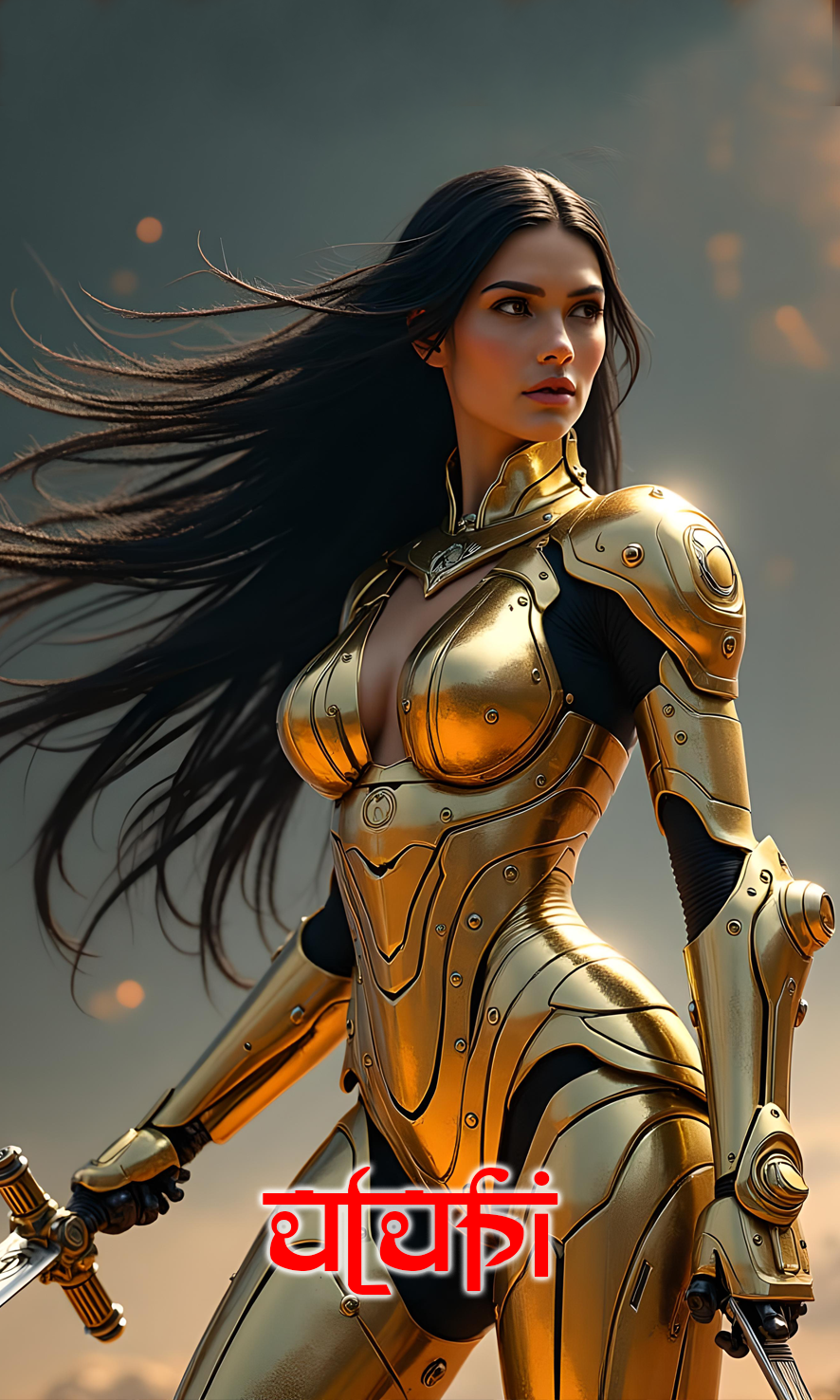
Ulupi had a warrior rank of Warrior. Ulupi is the daughter of the Naga king Kauravya, who
ruled the underwater kingdom of serpents. The Nagas
are a mystical race of serpent-like beings with human
attributes. They can change shape and can create
illusions. She proposed to and married Arjuna while he
was in Vanvas ordered by Yuddhistira for violating the
vow taken by Pandava brother to not go to Draupadi
during another brother’s year.
Quote
“After his ablutions had been over, and after he had offered oblations of water unto his deceased ancestors, he was about to get up from the stream to perform his sacrificial rites before the fire, when the mighty-armed hero, O king, was dragged into the bottom of the water by Ulupi, the daughter of the king of the Nagas, urged by the god of desire. And it so happened that the son of Pandu was carried into the beautiful mansion of Kauravya, the king of the Nagas. Arjuna saw there a sacrificial fire ignited for himself. Beholding that fire, Dhananjaya, the son of Kunti performed his sacrificial rites with devotion. And Agni was much gratified with Arjuna for the fearlessness with which that hero had poured libations into his manifest form. After he had thus performed his rites before the fire, the son of Kunti, beholding the daughter of the king of the Nagas, addressed her smilingly and said, ‘O handsome girl, what an act of rashness hast thou done. O timid one! Whose is this beautiful region, who art thou and whose daughter?’ “Hearing these words of Arjuna, Ulupi answered, ‘There is a Naga of the name of Kauravya, born in the line of Airavata. I am, O prince, the daughter of that Kauravya, and my name is Ulupi. O tiger among men, beholding thee descend into the stream to perform thy ablutions, I was deprived of reason by the god of desire. O sinless one, I am still unmarried. Afflicted as I am by the god of desire on account of thee, O thou of Kuru’s race, gratify me today by giving thyself up to me.’
“Arjuna replied, ‘Commanded by king Yudhishthira, O amiable one, I am undergoing the vow of Brahmacharin for twelve years. I am not free to act in any way I like. But, O ranger of the waters, I am still willing to do thy pleasure (if I can). I have never spoken an untruth in my life. Tell me, therefore, O Naga maid, how I may act so that, while doing thy pleasure, I may not be guilty of any untruth or breach of duty.’ “Ulupi answered, ‘I know, O son of Pandu, why thou wanderest over the earth, and why thou hast been commanded to lead the life of a Brahmacharin by the superior. Even this was the understanding to which all of you had been pledged, viz., that amongst you all owning Drupada’s daughter as your common wife, he who would from ignorance enter the room where one of you would be sitting with her, should lead the life of a Brahmacharin in the woods for twelve years. The exile of any one amongst you, therefore, is only for the sake of Draupadi. Thou art but observing the duty arising from that vow. Thy virtue cannot sustain any diminution (by acceding to my solicitation). Then again, O thou of large eyes, it is a duty to relieve the distressed. Thy virtue suffereth no diminution by relieving me. Oh, if ] (by this act), O Arjuna, thy virtue doth suffer a small diminution, thou wilt acquire great merit by saving my life. Know me for thy worshipper, O Partha! Therefore, yield thyself up to me! Even this, O lord, is the opinion of the wise (viz., that one should accept a woman that wooeth). If thou do not act in this way, know that I will destroy myself. O thou of mighty arms, earn great merit by saving my life. I seek thy shelter, O best of men! Thou protectest always, O son of Kunti, the afflicted and the masterless. I seek thy protection, weeping in sorrow. I woo thee, being filled with desire. Therefore, do what is agreeable to me. It behoveth thee to gratify my wish by yielding thy self up to me.’ “Vaisampayana said, ‘Thus addressed by the daughter of the king of the Nagas, the son of Kunti did everything she desired, making virtue his motive. The mighty Arjuna, spending the night in the mansion of the Naga rose with the sun in the morning. Accompanied by Ulupi he came back from the palace of Kauravya to the region where the Ganges entereth the plains. The chaste Ulupi, taking her leave there, returned to her own abode. And, O Bharata, she granted unto Arjuna a boon making him invincible in water, saying, ‘Every amphibious creature shall, without doubt, be vanquishable by thee.’” – The Mahabharata, Book 1: Adi Parva: Arjuna-vanavasa Parva: Section 216