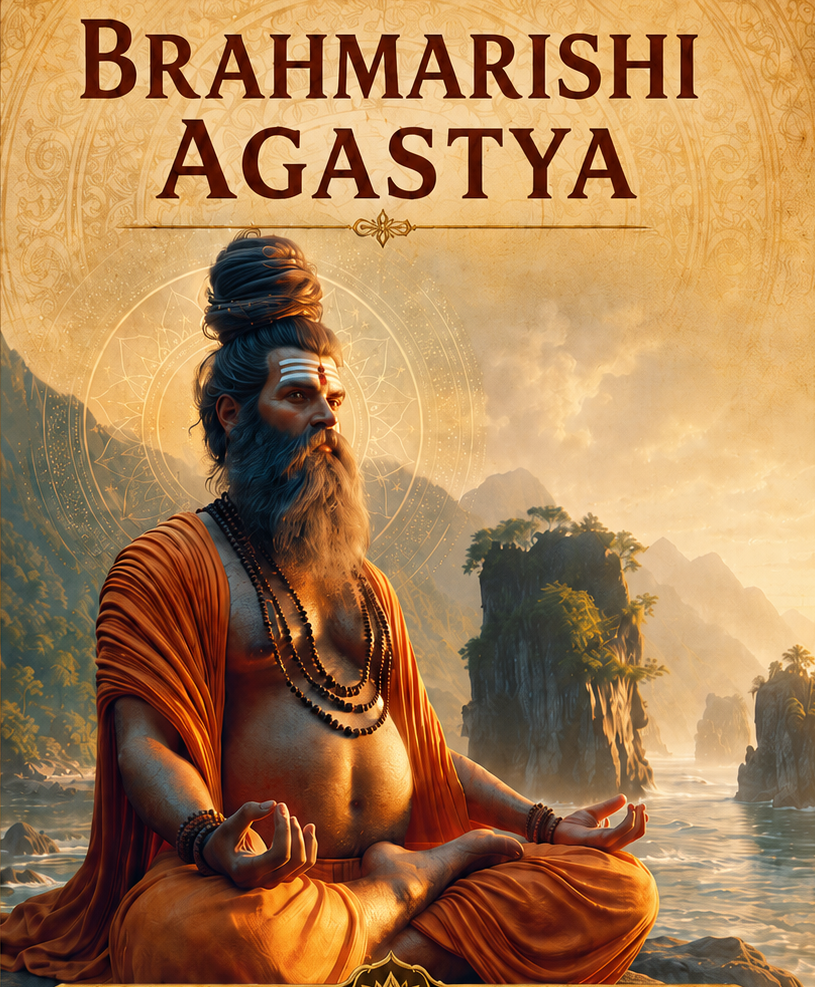
Brahmarishi Agastya
Other names: Agasthya; Āgastya. Born from the powers of Mitra and Varuna in a water pot, he is famed as the husband of Lopamudra and a composer of Vedic hymns. His legends include drinking the ocean to aid the Devas, subduing the Vindhya mountain, and destroying the asura Vatapi.
“And, O Yudhishthira, in the country of the Pandyas are the tirthas named Agastya and Varuna! And, O bull among men, there, amongst the Pandayas, is the tirtha called the Kumaris.”
“The god of wind once more spoke to him, ‘Listen now, O king, to the story of the greatness of the Brahmana Agastya. Once on a time, the gods were subjugated by the Asuras upon which they became very cheerless. The sacrifices of the deities were all seized, and the Swadha of the Pitris was also misappropriated. Indeed, O Chief of the Haihayas, all the religious acts and observances of human beings also were suspended by the Danavas. Divested of their prosperity, the deities wandered over the earth as we have heard. One day, in course of their wandering they met Agastya of high vows, that Brahmana, O king, who was endued with great energy and splendour which was as blazing as that of the sun. Saluting him duly, the deities made the usual enquiries of politeness. They then, O King, said these words unto that high-souled one, ‘We have been defeated by the Danavas in battle and have, therefore, fallen off from affluence and prosperity. Do thou, therefore, O foremost of ascetics, rescue us from this situation of great fear.’ Thus informed of the plight to which the deities had been reduced, Agastya became highly incensed (with the Danavas). Possessed of great energy, he at once blazed forth like the all-consuming fire at the time of the universal dissolution. With the blazing rays that then emanated from the Rishi, the Danavas began to be burnt. Indeed, O king, thousands of them began to drop down from the sky. Burning with the energy of Agastya, the Danavas, abandoning both heaven and earth, fled towards the southern direction. At that time the Danava king Vali was performing a Horse-sacrifice in the nether regions. Those great Asuras who were with him in those regions or who were dwelling in the bowels of the earth, were not burnt. The deities, upon the destruction of their foes, then regained their own regions, their fears entirely dispelled. Encouraged by what he accomplished for them, they then solicited the Rishi to destroy those Asuras who had taken refuge within the bowels of the earth or in the nether regions.” – The Mahabharata, Book 13: Anusasana Parva: Section CLV