
Sthulakesha - Sage - Odra

Maharishi Sthulakesa

Other names: Sthulakesha; Sthūlakeśa. A compassionate forest sage who found the abandoned infant Pramadvara, daughter of Menaka and the Gandharva Vishvavasu, and raised her in his hermitage. His guardianship makes him central to the Ruru-Pramadvara love and revival story.

“”Formerly there was a great Rishi called Sthulakesa possessed of ascetic power and learning and kindly disposed towards all creatures. At that time, O Brahmana sage, Viswavasu, the King of the Gandharvas, it is said, had intimacy with Menaka, the celestial dancing-girl. And the Apsara, Menaka, O thou of the Bhrigu race, when her time was come, brought forth an infant near the hermitage of Sthulakesa. And dropping the newborn infant on the banks of the river, O Brahmana, Menaka, the Apsara, being destitute of pity and shame, went away. And the Rishi, Sthulakesa, of great ascetic power, discovered the infant lying forsaken in a lonely part of the river-side. And he perceived that it was a female child, bright as the offspring of an Immortal and blazing, as it were, with beauty: And the great Brahmana, Sthulakesa, the first of Munis, seeing that female child, and filled with compassion, took it up and reared it. And the lovely child grew up in his holy habitation, the noble-minded and blessed Rishi Sthulakesa performing in due succession all the ceremonies beginning with that at birth as ordained by the divine law. And because she surpassed all p. 50 of her sex in goodness, beauty, and every quality, the great Rishi called her by the name of Pramadvara.” – The Mahabharata, Book 1: Adi Parva: Pauloma Parva: Section VIII
Similar Posts

  • |

    Maharishi Rishyasringa

    Other names: Ṛṣyaśṛṅga; Rishyashringa; Rishyasringar. Son of the sage Vibhandaka; his unusual birth from a deer and the horn on his forehead gave him the name “deer-horned.” Raised in isolation in the forest, he later brought rain to Anga, married Shanta, and is remembered for performing the Putreshti sacrifice for King Dasharatha. “O ruler of…

  • |

    Devarishi Kumaras

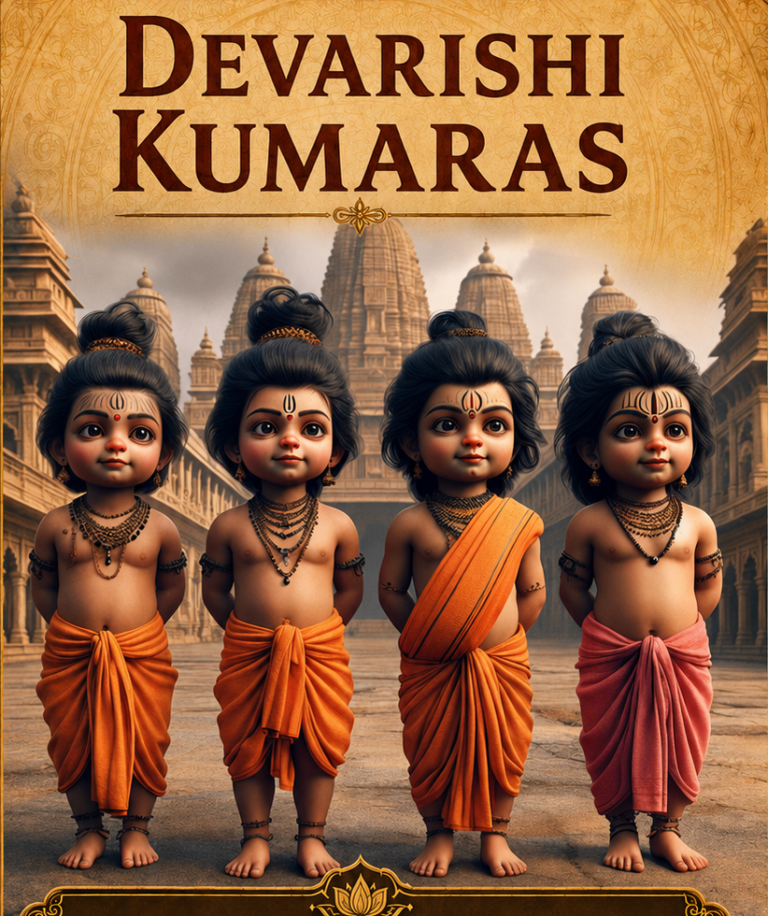
    Other names: Sanaka; Sanandana; Sanatana; Sanatkumara; Four Kumaras. The four child-sages are mind-born sons of Brahma and are famed for celibacy, detachment, and pursuit of spiritual knowledge. Vaishnava tradition remembers them as self-realized sages who received knowledge from Brahma and taught devotion and wisdom. “It hath been sung by Sanatkumara and by the highsouled Vyasa,…

  • |

    Devarishi Pulastya

    Other names: Paulastya. One of Brahma’s mind-born Prajapatis and a Saptarishi of the first Manvantara. He is remembered as a transmitter of Purana knowledge, receiving the Vishnu Purana from Brahma and passing it to Parasara, and as the father of Vishravas, making him the ancestor of Kubera, Ravana, Kumbhakarna, and Vibhishana. “O tiger among kings,…

  • Brahmarishi Lomasa

    Other names: Lomaśa; Lomasha. A celestial sage who came from the heavens to the Pandavas during exile, carrying news connected with Arjuna’s stay in Indra’s realm. He guided Yudhishthira and his brothers through sacred tirthas, making him a central figure in the Mahabharata’s pilgrimage narratives. “Vaisampayana said, “One day, the great Rishi Lomasa in course…

  • |

    Brahmarishi Markandeya

    Other names: Markendeya; Mārkaṇḍeya. A long-lived sage and great devotee of Shiva and Vishnu, traditionally the son of Mrikandu. Shiva is said to have rescued him from Yama, and later narratives remember him as the sage who witnessed the cosmic dissolution and received profound visions of divine reality. “Thus fifteen years passed by, when sage…

  • |

    Brahmarishi Parasurama

    Other names: Bhargava Rama; Parashurama; Rama Jamadagnya. Son of Jamadagni and Renuka of the Bhargava line, he is the axe-bearing Brahmin-warrior famed for defeating Kartavirya Arjuna and the Haihayas. Tradition also remembers him as a great master of celestial weapons and as a teacher of later Kshatriya heroes such as Bhishma. “Then the mighty son…

Leave a Reply

Your email address will not be published. Required fields are marked *