Bhagadatta
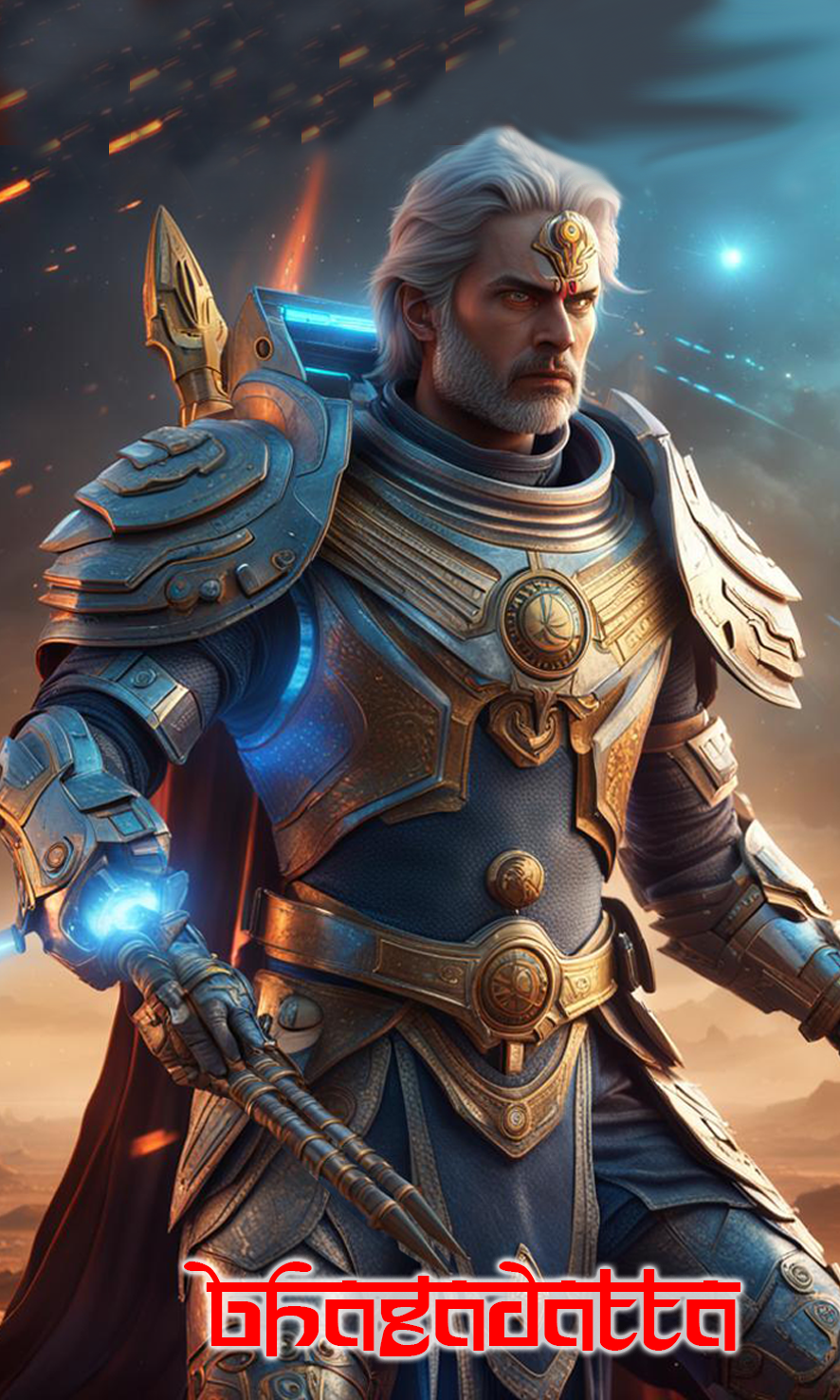
Bhagadatta had a warrior rank of Maharathi. Affiliation: Kaurava. Bhagadatta was the son of King Narakasura of Pragjyotisha. Bhagadatta was born from a limb of the asura called Bashkala.He was a renowned warrior, and was known to be a great friend of Indra.
Quote
“The ruler of Pragjyotisha, the brave Bhagadatta of exceeding prowess, is the foremost of those holding the elephant hook, and is skilled also in fighting from a car. An encounter took place between him and the wielder of Gandiva for days together, O king, each desirous of victory over the other. Then Bhagadatta, O son of Gandhari, who regarded Indra as his friend, made friendship with (Indra’s son) the high-souled Pandava. Skilled in fight from the elephant’s neck, this king will fight in battle, like Vasava among the celestials, fighting from his Airavata.’”
The Mahabharata, Book 5: Udyoga Parva: Uluka Dutagamana Parva: section CLXVIII
“Filled then with rage, he with Mantras, turned his hook into the Vaishnava weapon and hurled it at Arjuna’s breast. That allslaying weapon, hurled by Bhagadatta, Kesava, covering Arjuna, received on his breast. Thereupon, that weapon became a triumphal garland on Kesava’s breast. Arjuna then cheerlessly addressed Kesava, saying, ‘O sinless one, without battling thyself, thou art to only guide my steed! Thou hadst said so, O lotus-eyed one! Why then dost thou not adhere to thy promise? If I sink in distress, or become unable to baffle, or resist a foe or weapon, then mayst thou act so, but not when I am standing thus. Thou knowest that with my bow and arrows I am competent to vanquish these worlds with the gods, the Asuras, and men.’ Hearing these words of Arjuna, Vasudeva replied unto him, saying, ‘Listen, O Partha, to this secret and ancient history as it is, O sinless one! I have four forms, eternally engaged as I am in protecting the worlds. Dividing my own Self, I ordain the good of the worlds. One form of mine, staying on the earth, is engaged in the practice of ascetic austerities. Another beholdeth the good and the evil deeds in the world. My third form, coming into the world of men, is engaged in action. My fourth form lieth down in sleep for a thousand years. The form of mine which awaketh from sleep at the end of a thousand years, granteth, upon awakening, excellent boons to persons deserving of them. The earth, knowing (on one occasion) that that time had come, asked of me a boon for (her son) Naraka. Hear, O Partha, what that boon was. Possessed of the Vaishnava weapon, let my son become incapable of being slain by the gods and the Asuras. It behoveth thee to grant me that weapon. Hearing this prayer, I then gave, in days of old, the supreme and infallible Vaishnava weapon to the Earth’s son. I said also at that time these words, ‘O Earth, let this weapon be infallible for the protection of Naraka. None will be able to slay him. Protected by this weapon, thy son will always, in all the worlds, be invincible and crush all hostile hosts.’ Saying, So be it! the intelligent goddess went away, her wishes fulfilled. And Naraka also became invincible and always scorched his foes. It was from Naraka, O Partha, that the ruler of the Pragjyotishas got this weapon of mine. There is none, in all the world, O sire, including even Indra and Rudra, who is unslayable by this weapon. It was for thy sake, therefore, that I baffled it, violating my promise. The great Asura hath now been divested of that supreme weapon. Slay now, O Partha, that invincible foe of thine, viz., Bhagadatta, enemy of the gods, even as I formerly slew for the good of the worlds, the Asura Naraka.’ Thus addressed by the high-souled Kesava, Partha suddenly overwhelmed Bhagadatta with clouds of whetted arrows. Then, the mighty-armed and high-souled Arjuna fearlessly struck a long arrow between the frontal globes of his enemy’s elephant. That arrow, splitting the elephant like the thunder splitting a mountain, penetrated into its body to the very wings, like a snake penetrating into an ant-hill. Though urged repeatedly then by Bhagadatta, the elephant refused to obey like a poor man’s wife her lord. With limbs paralysed, it fell down, striking the earth with its tusks. Uttering a cry of distress, that huge elephant gave up the ghost. The son of Pandu then, with a straight shaft furnished with a crescent-shaped head, pierced the bosom of king Bhagadatta. His breast, being pierced through by the diadem-decked (Arjuna), king Bhagadatta, deprived of life, and threw down his bow and arrows. Loosened from his head, the valuable piece of cloth that had served him for a turban, fell down, like a petal from a lotus when its stalk is violently struck.” – The Mahabharata, Book 7: Drona Parva: Dronabhisheka Parva: Section XXVII