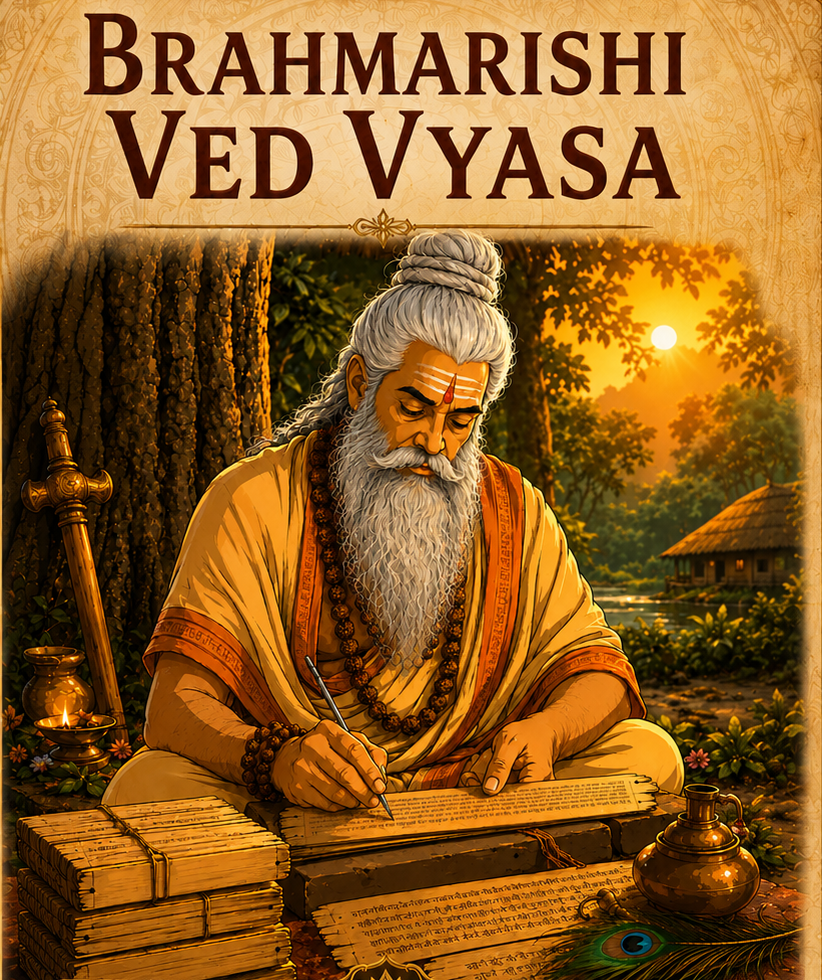
Brahmarishi Ved Vyas
|

Brahmarishi Ved Vyas

Other names: Krishna Dvaipayana; Krishna Dwaipayana; Vyasa; Vyas; Vedavyasa. Son of Parasara and Satyavati, he is revered as the arranger of the Vedas and the composer of the Bharata/Mahabharata tradition. His disciple Vaishampayana is remembered as the first great reciter of the Bharata to King Janamejaya.

“Vyasa continued, ‘Hearing these words of the former Indras, the wielder of the thunderbolt once more addressed that foremost of gods, saying, ‘Instead of going myself, I shall, with a portion of my energy, create from myself a person for the accomplishment of the task (thou assignest) to form the fifth among these!’ Vishwabhuk, Bhutadhaman, Sivi of great energy, Santi the fourth, and Tejaswin, these it is said And the illustrious god of the formidable bow, from his kindness, granted unto the five Indras the desire they cherished. And he also appointed that woman of extraordinary beauty, who was none else than celestial Sri (goddess of grace) herself, to be their common wife in the world of men. Accompanied by all those Indras, the god Isana then went unto Narayana of immeasurable energy, the Infinite, the Immaterial, the Uncreate, the Old, the Eternal, and the Spirit of these universes without limits. Narayana approved of everything…
Vyasa continued, ‘O Drupada, this thy daughter of celestial beauty is that maiden. Indeed, the faultless Krishna (Draupadi) sprung from Prishata’s race hath been pre-ordained to become the common wife of five husbands. The celestial Sri, having undergone severe ascetic penances, hath, for the sake of the Pandavas, had her birth as thy daughter, in the course of thy grand sacrifice. That handsome goddess, waited upon by all the celestials, as a consequence of her own acts becomes the (common) wife of five husbands. It is for this that the self-create had created her. Having listened to all this, O king Drupada, do what thou desirest.'” – The Mahabharata, Book 1: Adi Parva: Vaivahika Parva: Section CLXLIX
Similar Posts

  • |

    Maharishi Kakshivat

    Other names: Kakṣīvat; Kaksivat; Kākṣīvat. A Vedic sage associated with the Angirasa line and described as a mantrakṛt, or maker of sacred hymns. Traditions identify him with the line of Dīrghatamas, and his daughter Ghosha is also remembered as a composer of Vedic verses. “And King Vali said, ‘O illustrious one, it behoveth thee to…

  • |

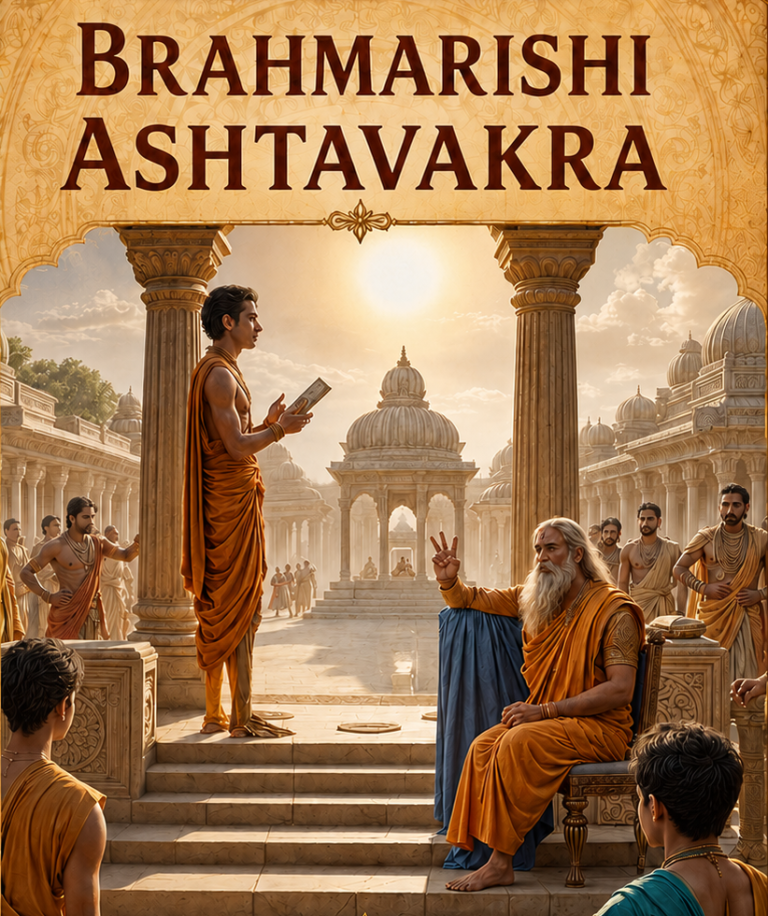
    Brahmarishi Ashtavakra

    Other names: Aṣṭāvakra. Son of Kahoda/Kahola and Sujata, daughter of Uddalaka. While still in the womb he corrected his father’s Vedic recitation and was cursed to be born bent in eight places; later he defeated Vandi at King Janaka’s court, freed his father, and became associated with the Ashtavakra Gita. Then Ashtavakra said, ‘One is…

  • Maharishi Svetaketu

    Other names: Swetaketu; Śvetaketu. Son of Uddalaka Aruni and a key student in the Chandogya Upanishad. After returning from study with pride in his learning, he receives from his father the profound teaching on the identity of the individual self with ultimate reality, expressed through “Tat Tvam Asi.” “Great Rishi of the name of Uddalaka,…

  • |

    Devarishi Asita Devala

    Other names: Asita; Devala; Asita-Devala. A sage associated with the Moksha and Yoga teachings of Jaigishavya in the Mahabharata. After witnessing Jaigishavya’s yogic powers, he sought instruction in the path of emancipation and became linked with teachings on detachment, truth, and spiritual discipline. “The highly blessed Devala then reflected upon the power of Jaigishavya and…

  • |

    Maharishi Ne

    Other names: Ne Muni; Nemi. A legendary sage connected with the sacred history of Nepal. Nepalese chronicle traditions describe Ne Muni as the protector, or pāla, of the land; the name Nepal is explained in this tradition as the land protected by Ne, and he is also linked with the founding of an early ruling…

  • Maharishi Veda

    Other names: Rishi Veda. One of the three disciples of Ayoda-Dhaumya, alongside Aruni and Upamanyu. In the Mahabharata, he patiently endured hardship while serving his preceptor, gained knowledge through that discipline, later entered household life, and became the teacher of Uttanka. “Then Veda the other disciple of Ayoda-Dhaumya was called. His preceptor once addressed him,…

Leave a Reply

Your email address will not be published. Required fields are marked *