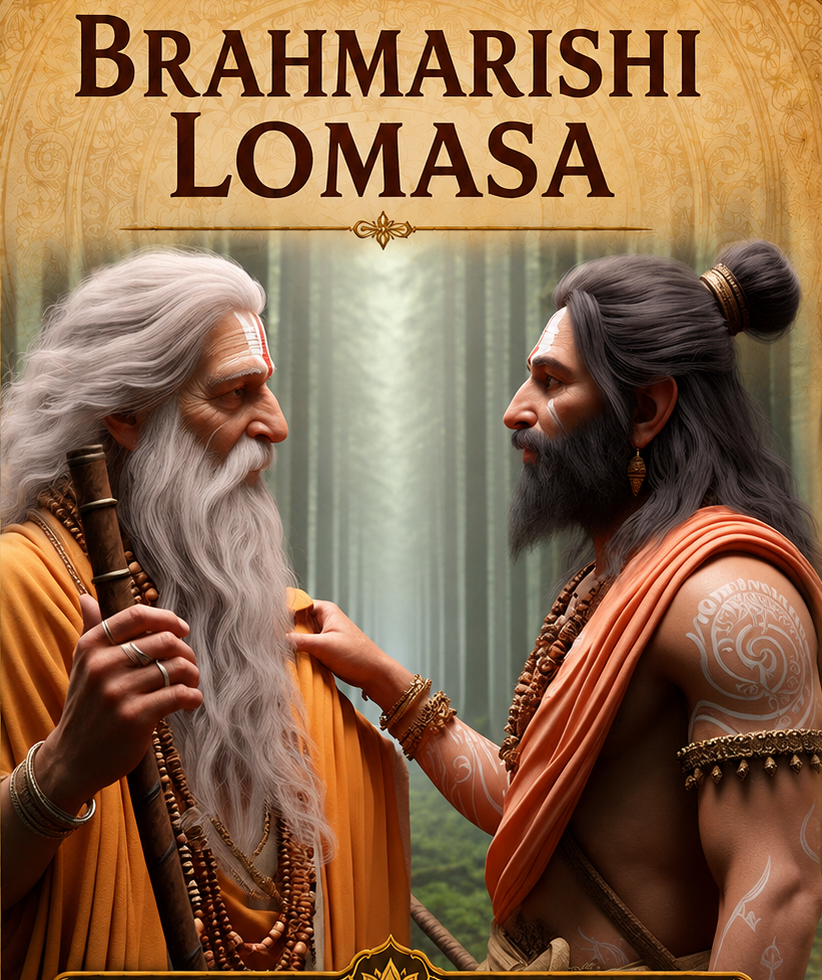
Brahmarishi Lomasa

Other names: Lomaśa; Lomasha. A celestial sage who came from the heavens to the Pandavas during exile, carrying news connected with Arjuna’s stay in Indra’s realm. He guided Yudhishthira and his brothers through sacred tirthas, making him a central figure in the Mahabharata’s pilgrimage narratives.

“Vaisampayana said, “One day, the great Rishi Lomasa in course of his wanderings, went to the abode of Indra, desirous of beholding the lord of the celestials. And the great Muni, having approached the chief of the gods, bowed to him respectfully. And he beheld the son of Pandu occupying half of the seat of Vasava… Go thou at my request to earth. Thou wilt behold the brave Yudhishthira living in the woods of Kamyaka. And for me tell thou the virtuous Yudhishthira of unbaffled prowess in battle, that he should not be anxious on account of Phalguna, for that hero will return to earth a thorough master of weapons, for without sanctified prowess of arms, and without skill in weapons, he would not be able to encounter Bhishma and Drona and others in battle. Thou wilt also represent unto Yudhishthira that the illustrious and mighty-armed Gudakesa, having obtained weapons, hath also mastered the science of celestial dancing and music both instrumental and vocal. And thou wilt also tell him, O king of men, O slayer of foes, thyself also, accompanied by all thy brothers, should see the various sacred shrines. For having bathed in different sacred waters, thou wilt be cleansed from thy sins, and the fever of thy heart will abate. And then thou wilt be able to enjoy thy kingdom, happy in the thought that thy sins have been washed off. And, O foremost of Brahmanas, endued with ascetic power, it behoveth thee also to protect Yudhishthira during his wandering over the earth. Fierce Rakshasas ever live in mountain fastnesses and rugged steppes. Protect thou the king from those cannibals.’” – The Mahabharata, Book 3: Vana Parva: Indralokagamana Parva: Section XLVII
Similar Posts

  • |

    Devarishi Parvata

    Other names: Parvata Muni. A Devarishi closely associated with Narada in Purana and Mahabharata traditions. Stories of Parvata often involve pilgrimage, curses, and royal courts, especially narratives in which he and Narada appear together as divine wandering sages. Sanjaya said, ‘During the progress of that fierce and terrible battle, when the world was enveloped with…

  • |

    Maharishi Rishyasringa

    Other names: Ṛṣyaśṛṅga; Rishyashringa; Rishyasringar. Son of the sage Vibhandaka; his unusual birth from a deer and the horn on his forehead gave him the name “deer-horned.” Raised in isolation in the forest, he later brought rain to Anga, married Shanta, and is remembered for performing the Putreshti sacrifice for King Dasharatha. “O ruler of…

  • |

    Brahmarishi Bharadwaja

    Other names: Bharadvaja. A great sage of the Angirasa/Brihaspati line and father of Drona. The Mahabharata connects him with advanced knowledge of weapons through Agnivesa and with the early education of Drona and Drupada; Vedic tradition also remembers Bharadwaja as a major seer. “”‘In days of yore, while the great Rishi Bharadwaja was saying his…

  • Maharishi Vibhandaka

    Other names: Vibhāṇḍaka. Son of Kashyapa and father of Rishyasringa. His son’s extraordinary birth through a deer and his isolated upbringing in the forest form one of the Mahabharata’s most unusual origin stories, emphasizing austerity, restraint, and the power of tapas. “When the great saint Vibhandaka should enquire of you about his son, ye must…

  • |

    Maharishi Parasara

    Other names: Parāśara; Parasara Muni. Son of Shakti and grandson of Vasistha, he is the father of Krishna Dvaipayana Vyasa by Satyavati. He is revered as the narrator of the Vishnu Purana to Maitreya and as an important teacher of cosmic history and dharma. “Parasara said,–‘In former times I gratified Sarva, O king. I then…

  • |

    Brahmarishi Ved Vyas

    Other names: Krishna Dvaipayana; Krishna Dwaipayana; Vyasa; Vyas; Vedavyasa. Son of Parasara and Satyavati, he is revered as the arranger of the Vedas and the composer of the Bharata/Mahabharata tradition. His disciple Vaishampayana is remembered as the first great reciter of the Bharata to King Janamejaya. “Vyasa continued, ‘Hearing these words of the former Indras,…

Leave a Reply

Your email address will not be published. Required fields are marked *