Devarishi Jaigishavya
Other names: Jaigīṣavya. A yogic ascetic associated with Asita Devala in the Mahabharata. After Devala witnessed his extraordinary yogic reach, Jaigishavya instructed him in the path of Moksha, Yoga, and equanimity; tradition also places him among sages meditating in Brahma’s assembly.
“Then Devala, beholding the power derived through Yoga of Jaigishavya’s penances, reflected upon it with his righteous understanding and approaching that great ascetic, O king, with humility, addressed the highsouled Jaigishavya, saying, ‘I desire, O adorable one, to adopt the religion of Moksha (Emancipation)! Hearing these words of his, Jaigishavya gave him lessons. And he also taught him the ordinances of Yoga and the supreme and eternal duties and their reverse. The great ascetic, seeing him firmly resolved, performed all the acts (for his admission into that religion) according to the rites ordained for that end…
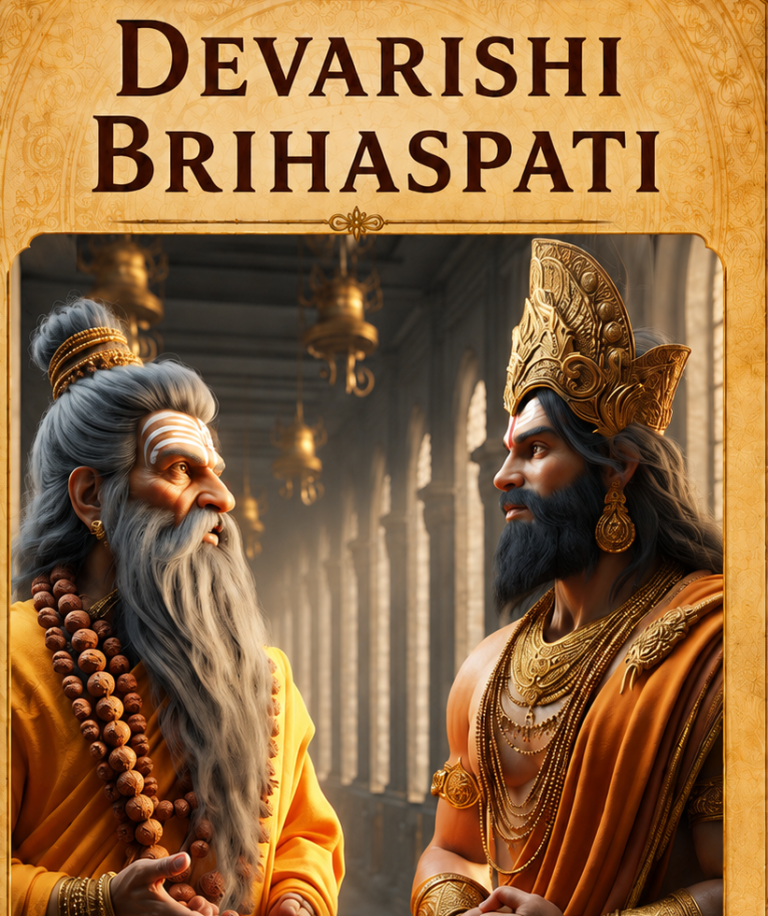
The celestials then, headed by Brihaspati, applauded Jaigishavya and the penances of that ascetic. Then that foremost of ascetics, Narada, addressing the gods, said, ‘There is no ascetic penance in Jaigishavya since he filled Asita with wonder!’ The denizens of heaven then, addressing Narada who said such frightful words, said, ‘Do not say so about the great ascetic Jaigishavya! There is no one superior or even equal to this high-souled one in force of energy and penance and Yoga!’ Even such was the power of Jaigishavya as also of Asita. This is the place of those two, and this the tirtha of those two high-souled persons. Bathing there and giving away wealth unto the Brahmanas, the high-souled wielder of the plough, of noble deeds, earned great merit and then proceeded to the tirtha of Soma” – The Mahabharata, Book 9: Shalya Parva: Section 50
“”Devala said, ‘Thou art not gladdened when praised. Thou dost not give way to wrath when blamed or censured. What, indeed, is thy wisdom? Whence hast thou got it? And what, indeed, is the refuge of that wisdom?’
“Bhishma said, ‘Thus questioned by Devala, the pure Jaigishavya of austere penances, said those words of high import, fraught with full faith and profound sense.’
“Jaigishavya said, ‘O foremost of Rishis, I shall tell thee of that which is the highest end, that which is the supreme goal, that which is tranquillity, in the estimation of all persons of righteous acts. They, O Devala, who behave uniformly towards those that praise them and those that blame them, they who conceal their own vows and good acts, they who never indulge in recriminations, they who never say even what is good when it is calculated to injure (instead of producing any benefit) , they who do not desire to return injury for injury received, are said to be men possessed of wisdom.” – The Mahabharata, Book 12: Santi Parva: Mokshadharma Parva: Section CCXXIX