Brahmarishi Chyavana
|

Brahmarishi Chyavana

Other names: Cyavana; Chyavana Rishi. Son of Bhrigu and husband of Sukanya. In the Mahabharata he is restored to youth by the Ashvin twins, whom he then secures a share of Soma at King Saryati’s sacrifice, making him a major figure in stories of rejuvenation and divine medicine.

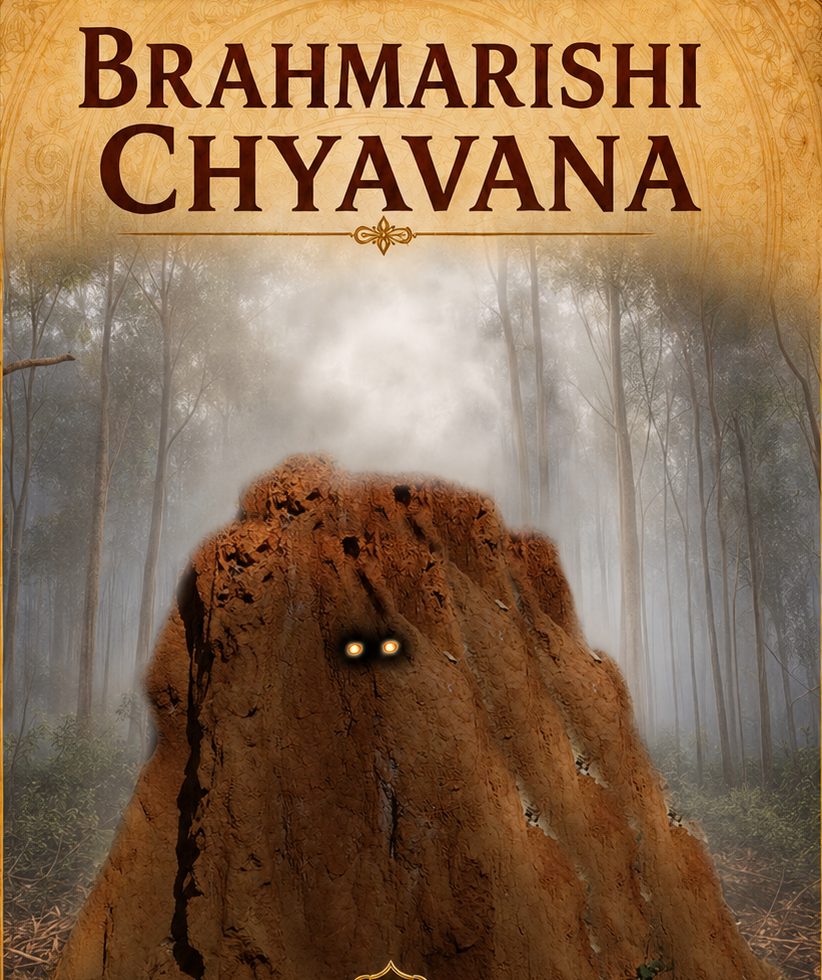
“Lomasa said, ‘A son was born to the great saint Bhrigu, Chyavana by name. And he, of an exceedingly resplendent form, began to practise austerities p. 259 by the side of yonder lake. And, O Pandu’s son! O protector of men! he of mighty energy assumed the posture called Vira, quiet and still like an inanimate post, and for a long period, remained at the same spot of ground. And he was turned into an anthill covered over with creepers. And after the lapse of a long period, swarms of ants enveloped him. And covered all over with ants, the sagacious saint looked exactly like a heap of earth. And he went on practising austerities, enveloped on all sides with that anthill. Now after the lapse of a long space of time, that ruler of earth, Saryati by name, for amusement visited this pleasant and excellent lake. With him were four thousand females, espoused by him, O son of Bharata’s race! there was also his only daughter endued with beautiful brows, named Sukanya…
that regenerate Rishi possessing ascetic energy, who had a low voice, called the auspicious one,–but she heard him not. Then seeing the eyes of Bhrigu’s son from the ant-hill, Sukanya from curiosity and losing her sense, said, ‘What is this?’–and with thorns pierced the eyes (of the Rishi). And as his eyes being pierced by her, he felt exceeding pain and became wroth. And (from anger) he obstructed the calls of nature of Saryati’s forces.”- The Mahabharata, Book 3: Vana Parva: Tirtha-yatra Parva: Section CXXII

Similar Posts

  • Maharishi Vibhandaka

    Other names: Vibhāṇḍaka. Son of Kashyapa and father of Rishyasringa. His son’s extraordinary birth through a deer and his isolated upbringing in the forest form one of the Mahabharata’s most unusual origin stories, emphasizing austerity, restraint, and the power of tapas. “When the great saint Vibhandaka should enquire of you about his son, ye must…

  • |

    Brahmarishi Parasurama

    Other names: Bhargava Rama; Parashurama; Rama Jamadagnya. Son of Jamadagni and Renuka of the Bhargava line, he is the axe-bearing Brahmin-warrior famed for defeating Kartavirya Arjuna and the Haihayas. Tradition also remembers him as a great master of celestial weapons and as a teacher of later Kshatriya heroes such as Bhishma. “Then the mighty son…

  • |

    Devarishi Asita Devala

    Other names: Asita; Devala; Asita-Devala. A sage associated with the Moksha and Yoga teachings of Jaigishavya in the Mahabharata. After witnessing Jaigishavya’s yogic powers, he sought instruction in the path of emancipation and became linked with teachings on detachment, truth, and spiritual discipline. “The highly blessed Devala then reflected upon the power of Jaigishavya and…

  • |

    Brahmarishi Vasistha

    Other names: Vasishtha; Vashistha; Vasishta. A mind-born son of Brahma, husband of Arundhati, chief among the Saptarishis, and priest of the Ikshvaku/Solar dynasty. His conflict with Vishvamitra over the divine cow Nandini is one of the major sage narratives showing the superiority of spiritual power over royal force. “Gandharva, saying, ‘I desire to hear of…

  • |

    Brahmarishi Jaratkaru

    Other names: Jaratkāru. An austere sage whose ancestors required him to continue the lineage. He married the serpent-woman Jaratkaru/Manasa, sister of Vasuki, and became the father of Astika, whose birth was destined to save the Nagas from Janamejaya’s serpent sacrifice. “The ancestors said, ‘We are Rishis of rigid vows, called Yayavaras. We are sinking low…

  • Brahmarishi Agastya

    Other names: Agasthya; Āgastya. Born from the powers of Mitra and Varuna in a water pot, he is famed as the husband of Lopamudra and a composer of Vedic hymns. His legends include drinking the ocean to aid the Devas, subduing the Vindhya mountain, and destroying the asura Vatapi. “And, O Yudhishthira, in the country…

Leave a Reply

Your email address will not be published. Required fields are marked *